Glaucoma Diagnosis and Treatment
Glaucoma diagnosis and treatment with eye drops at the “New Vision” clinic (Vilnius, Lithuania): intraocular pressure control and optic nerve protection.
Conservative Glaucoma Management: Goal and Expected Outcome
Contact us
If you have any questions, call our friendly call center or make an appointment for diagnostics with further consultation.
We work:
Mon–Sat, 9:00 AM – 6:00 PM
Conservative Glaucoma Management: Goal and Expected Outcome
Pharmacological glaucoma management is aimed at maintaining stable control of intraocular pressure (IOP), protecting the optic nerve, and slowing disease progression. The physician’s primary objective is to select therapy that keeps IOP within an individually safe target range, while preserving the visual field and optic nerve status for as long as possible.
At the “Naujas regėjimas” Eye Clinic (Vilnius, Lithuania), glaucoma diagnosis and treatment are delivered in accordance with modern clinical protocols: comprehensive assessment, ophthalmologist consultation, an individualized treatment plan, ongoing follow‑up, and adjustment of the regimen when required.
Glaucoma Diagnosis: What Should Be Assessed Before Prescribing Drops
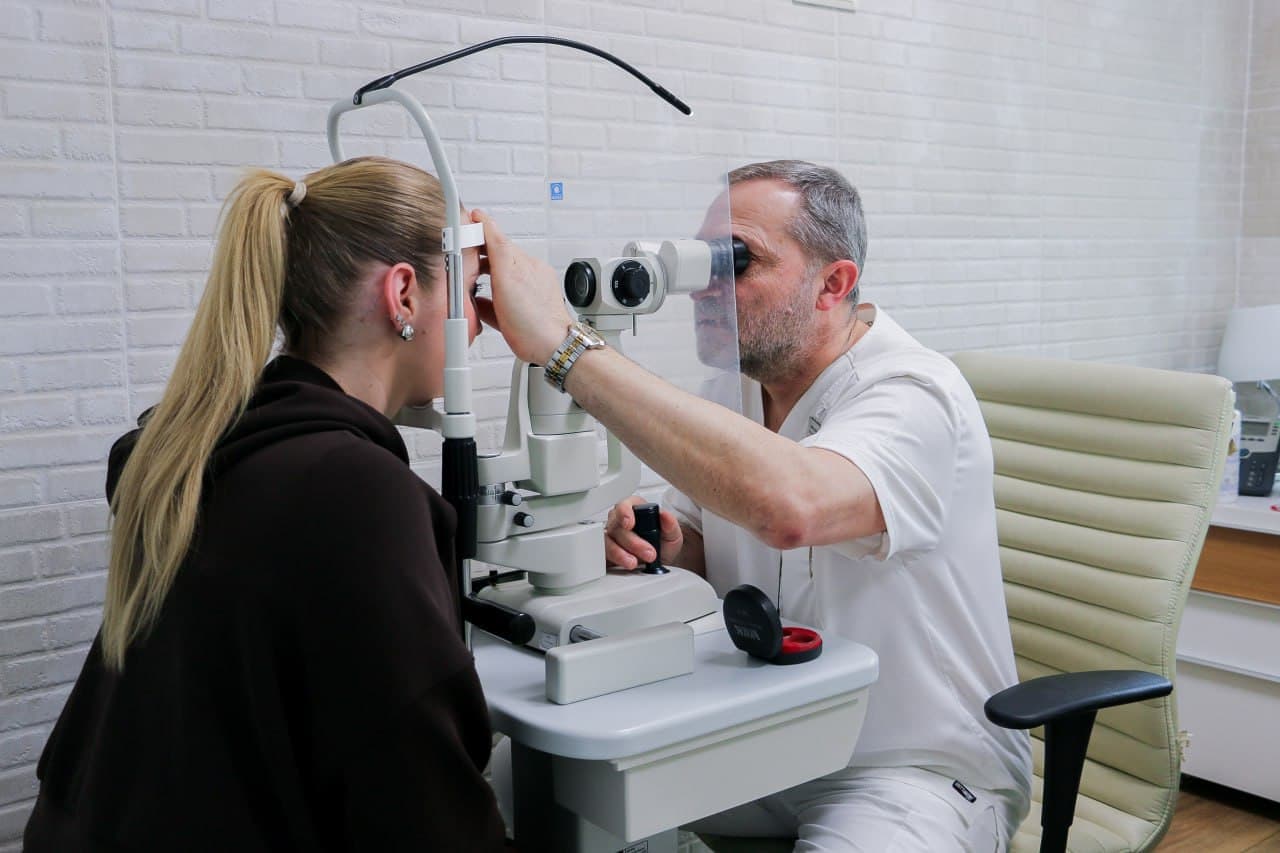
Glaucoma Diagnosis: What Should Be Assessed Before Prescribing Drops
For an accurate diagnosis and appropriate medication selection, it is important to evaluate not only IOP, but also the optic nerve and the eye’s aqueous outflow (drainage) system. The examination typically includes:
- intraocular pressure measurement (at different times of day if needed);
- pachymetry (corneal thickness influences tonometry accuracy);
- anterior chamber angle assessment (gonioscopy) to determine glaucoma type;
- evaluation of the optic nerve head (optic disc);
- optical coherence tomography (OCT) of the retinal nerve fiber layers / macular area (as indicated);
- perimetry (visual field testing) to detect functional changes;
- assessment of associated risk factors and overall health status.
This approach helps distinguish glaucoma from other causes of elevated IOP, determine disease stage, and select the optimal treatment strategy.
Glaucoma Treatment With Drops: How the Regimen Is Selected
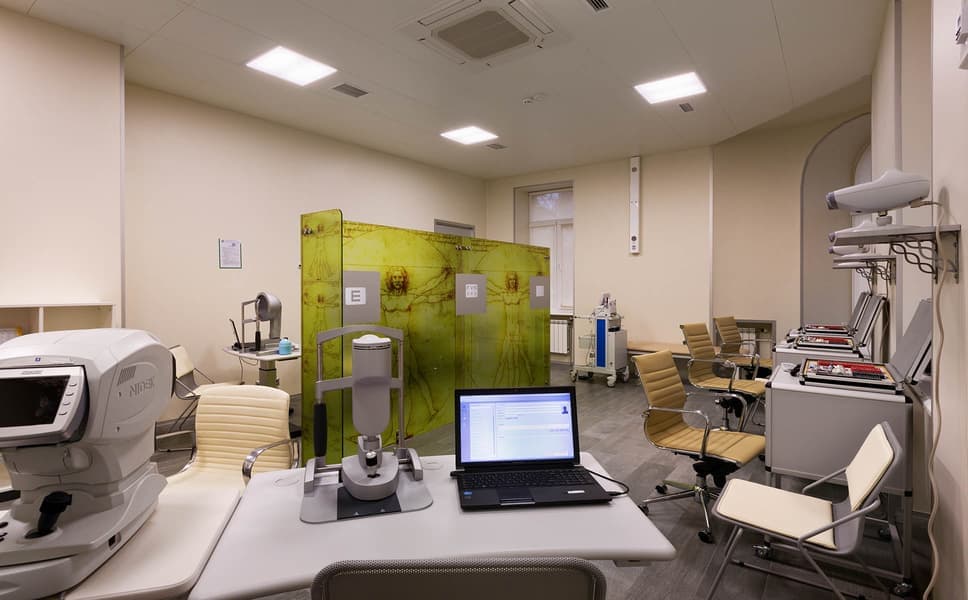
Glaucoma Treatment With Drops: How the Regimen Is Selected
Medical therapy most often begins with IOP‑lowering eye drops. The physician selects the medication based on glaucoma type, baseline IOP, optic nerve status, tolerability, lifestyle, and comorbid conditions.
Different medication groups are used in clinical practice (as indicated):
- agents that improve aqueous humor outflow;
- agents that reduce aqueous production;
- combination drops when one group is insufficient;
- preservative‑free formulations for dryness, allergy, or sensitivity to preservatives.
If rapid temporary IOP reduction is required (for example, in cases of markedly elevated pressure), the physician may prescribe additional short‑term therapy and closer monitoring.

Take care of your vision health today!
Book an eye examination to learn more about the condition of your visual system!
We work:
Mon–Sat, 9:00 AM – 6:00 PM
Follow‑Up in Glaucoma: Why Drops Without Monitoring Are Not Effective
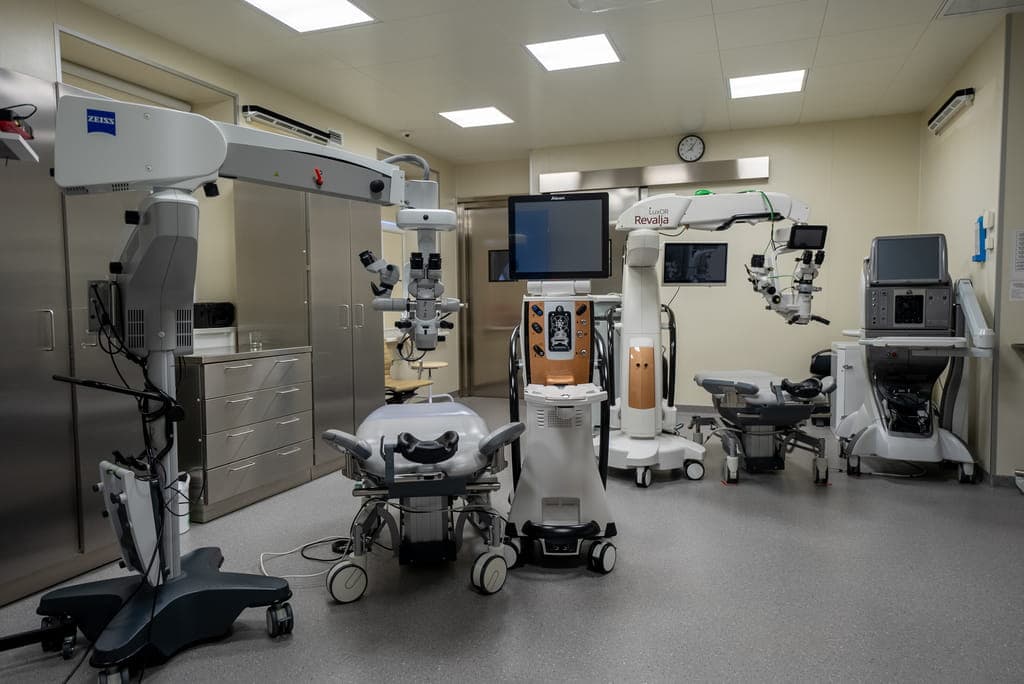
Follow‑Up in Glaucoma: Why Drops Without Monitoring Are Not Effective
Glaucoma requires systematic, long‑term management. Even when IOP readings are satisfactory, treatment may need adjustment if visual fields or OCT parameters change over time. Therefore, it is important to:
- adhere strictly to the instillation schedule (including time of day);
- not discontinue drops on your own, even if “nothing bothers you”;
- attend regular IOP checks and optic nerve examinations;
- inform your physician about side effects (burning, redness, dryness, headaches, pulse changes, etc.).
At “Naujas regėjimas” in Vilnius, we follow patients dynamically: we evaluate effectiveness, tolerability, and adherence, and if necessary we modify therapy to make it more convenient and stable.
Cost of Glaucoma Diagnosis and Treatment in Vilnius: What Affects the Price
Cost of Glaucoma Diagnosis and Treatment in Vilnius: What Affects the Price
The cost depends on the scope of testing (tonometry, OCT, perimetry, etc.), clinical complexity, the need for repeat IOP measurements, and the frequency of follow‑up visits.
During the consultation, the physician explains which tests are truly necessary for you and outlines a clear pathway: diagnosis → initiation of therapy → monitoring → regimen adjustment.
doctors
4
specialized doctors
Experts in surgical glaucoma treatment
Our doctors will carefully study the condition of your visual system and determine whether correction is possible in your case.

Experience since 1990
Andrey Radko
Chief physician. Ophthalmologist of the highest category.

Experience since 2017
Povilas Stirbys
Ophthalmologist of the highest category. Doctor expert.

Experience since 2006
Kseniya Kayalova
Ophthalmologist of the highest category. Doctor expert.

Experience since 2017
Maria Zhovtoshtan
Ophthalmologist. Doctor of Philosophy in the speciality of Medicine.
reviews
1M
happy clients
reviews
What our patients say about us
Our eye centre has performed over 1,000,000 successful laser vision correction procedures and provided more than 5,000,000 ophthalmology consultations.
reviews

Laser vision correction
Vyunikas Nikolajus Vladimirovičius
I would like to thank the staff of the „New Vision“ clinic for the work done. I liked the highly qualified work of all employees. Pleasant, friendly, and smiling staff make you feel welcome. I am very satisfied with the result. Thank you very much!
Laser vision correction
Gaidukas Elizaveta Vadimovna
When such a long-awaited event as vision correction happens, the environment around you, the level of service, the staff — everything plays a big role. In the New Vision medical center, everything was incredibly wonderful and of the highest level. The day of vision correction will remain in my memory in the brightest and happiest light.

Laser vision correction
Aurelija Prakialite
The clinic was recommended by my mother because her friends had laser correction here and were very satisfied with the results. Since I had poor eyesight for a long time, I decided to visit your clinic as well. The best thing I can say is that now I see without glasses. It’s hard to believe, but it’s true. The clinic staff is very friendly. When choosing a clinic, I recommend this one to everyone who wants to get rid of poor eyesight.
Laser vision correction
Petrovskaja Olga Aleksandrovna
At the medical center New Vision, I underwent laser vision correction. I really liked the doctors. The team is very friendly and well-coordinated. The attitude toward patients is very attentive. The surgery was successful. I see the world with my ‘new’ eyes. Many thanks to the medical center for this. I wish prosperity and success to New Vision.
Questions and Answers
In many cases, yes. Properly selected drops can keep IOP under control for years and slow progression. The key requirements are regular monitoring and consistent use of the prescribed medications.
Effectiveness is assessed by achieving the target IOP and by stability of OCT/visual field results over time—not solely by how you feel.
Possible reasons include missed doses, incorrect instillation technique, an unsuitable medication group, individual diurnal IOP variation, or interactions with systemic medications. This is addressed through follow‑up measurements and regimen adjustment.
Yes. Local reactions (burning, dryness, redness) are possible, and with some agents systemic effects may occur. The physician selects therapy considering contraindications and may switch to alternatives, including preservative‑free options.
Yes. Glaucoma is not only about IOP values. Progression may occur at “normal” IOP, therefore monitoring the optic nerve and visual fields is essential.
Frequency depends on the stage and stability of findings. After starting or changing therapy, follow‑up is typically more frequent, and later follows an individualized schedule set by your physician.
Tell your physician—this is common. A more convenient regimen may be selected (e.g., different dosing, combination drops), and reminders and proper instillation technique can be discussed.
If IOP remains elevated or progression is detected despite appropriate therapy, the physician will discuss expanding the management strategy. However, in most cases the starting and baseline approach is precise diagnosis and a well‑structured pharmacological treatment plan.
appointment booking
Convenient booking and transparent consultation cost
We have made the process of contacting the clinic as simple as possible. You only need to book an appointment with an ophthalmologist in Vilnius online or by phone.
book a consultation
“*” required fields