Dry Eye Syndrome Treatment
Clinical experience and modern diagnostics help slow disease progression and restore comfort when working at screens and in daily life.
about the service
Dry Eye Syndrome: diagnostics and medical (drug) therapy
Dry Eye Syndrome: diagnostics and medical (drug) therapy
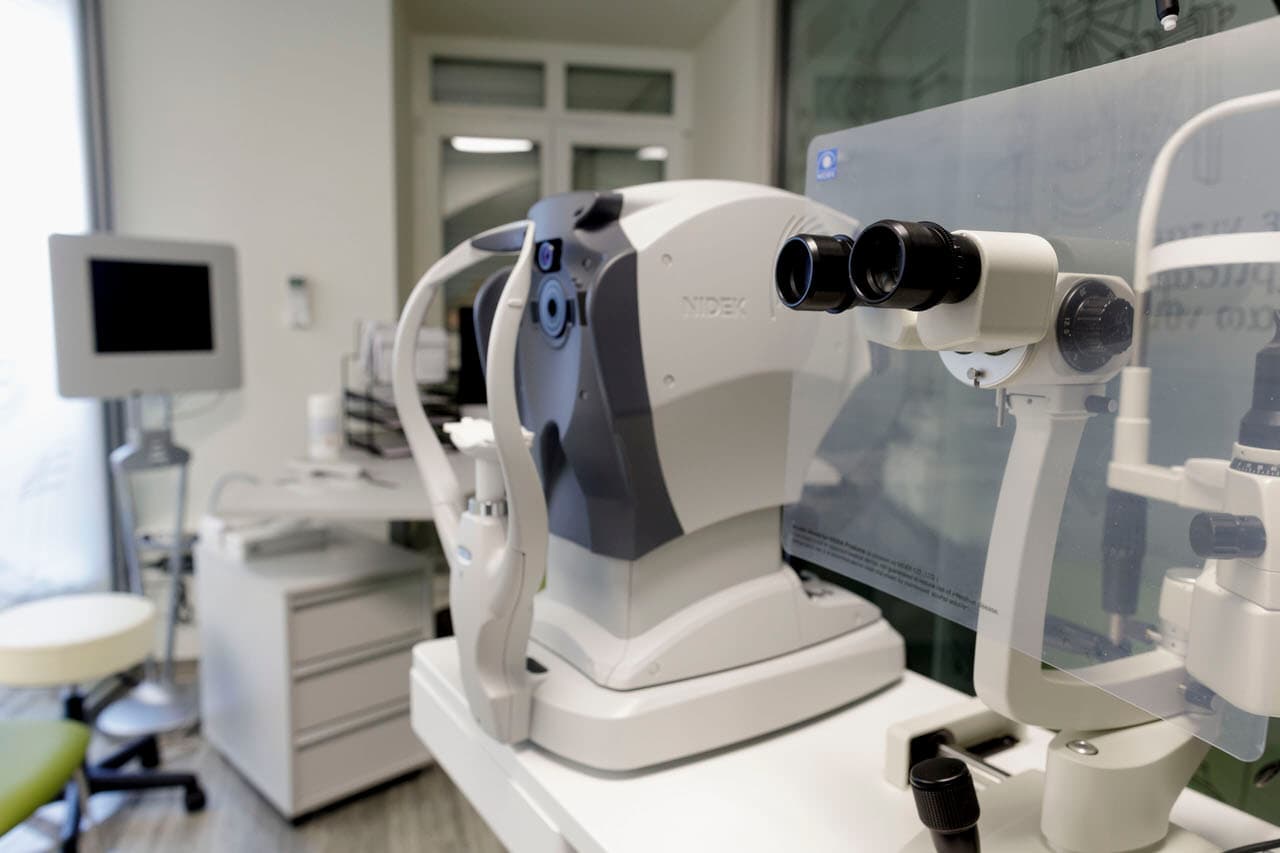
Dry eye syndrome (DES) is a condition in which the tear film becomes unstable and provides less protection to the ocular surface. As a result, dryness, burning, a “gritty/sandy” sensation, redness, rapid eye fatigue, and fluctuations in visual clarity may occur—especially toward the evening. Causes vary and may include meibomian gland dysfunction, infrequent/incomplete blinking, age- and hormone-related changes, dry air, prolonged computer work, concomitant conditions, and the use of certain medications.
At the eye clinic “Naujas regėjimas” (Vilnius, Lithuania), DES assessment is performed using modern equipment, including the IDRA diagnostic system (Italy), to objectively evaluate the tear film and eyelids and to develop a personalized treatment plan. Without accurate diagnostics, symptoms often persist; therefore, it is important to determine which mechanism predominates (reduced tear production, increased evaporation, inflammation of the ocular surface) and to select targeted conservative treatment, including medical (drug) therapy.
Diagnostic features:
We use validated methods and tailor treatment individually. Diagnostics are performed with professional ophthalmic equipment, including IDRA.
How is dry eye syndrome treated at the “Naujas regėjimas” clinic?
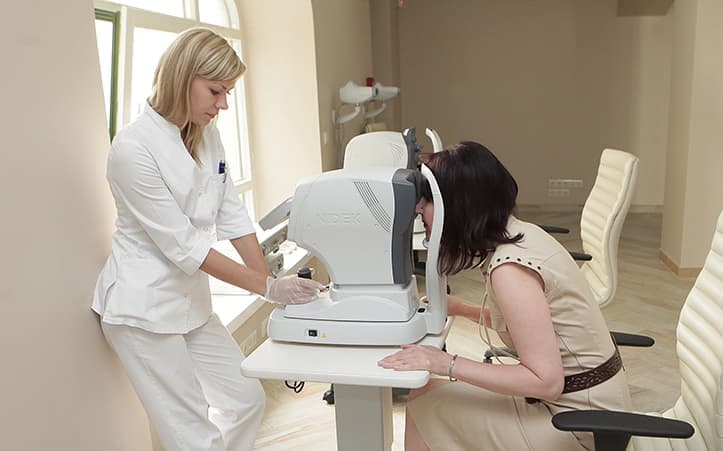
How is dry eye syndrome treated at the “Naujas regėjimas” clinic?
Treatment strategy is determined by diagnostic results and typically includes conservative therapy aimed at daily symptom control and restoration of tear film stability.
Medical (drug) therapy
The physician may prescribe:
- lubricating drops/gels (artificial tears) with a formulation matched to your DES type;
- anti-inflammatory therapy (when indicated) to reduce ocular surface inflammation;
- agents to stabilize the tear film and improve tolerance to screen-related load;
- therapy for meibomian gland dysfunction (when indicated), including medication regimens and supportive care.
Daily care and risk-factor modification
After the examination, the physician explains the results, highlights key parameters, and provides a clear plan: instillation schedule, eyelid hygiene, recommendations for monitor work, indoor microclimate, contact lenses, and cosmetics. Treatment is often staged: first reducing irritation and inflammation, then maintaining results with supportive therapy.
Causes of eye dryness
Contact us
If you have any questions, call our friendly call center or make an appointment for diagnostics with further consultation.
We work:
Mon–Sat, 9:00 AM – 6:00 PM
Causes of eye dryness
DES may involve different mechanisms. During diagnostics, tear film parameters, eyelid condition, meibomian glands, and blink pattern are assessed to select the most effective treatment.
Factors associated with insufficient “aqueous” tear component
- age-related changes and natural reduction in tear production;
- hormonal fluctuations (including menopause) and endocrine disorders;
- autoimmune conditions (including Sjögren’s syndrome);
- medications affecting mucous membranes (some antihistamines, antidepressants, diuretics, etc.);
- dehydration, inadequate fluid intake, recovery after illness or surgery.
Factors associated with increased tear film evaporation
- meibomian gland dysfunction and a weak lipid layer;
- infrequent/incomplete blinking during screen work;
- dry air, heating, air conditioning, wind, dust, smoke;
- contact lenses, decorative cosmetics, eyelash extensions, aggressive makeup removal;
- chronic inflammation of the eyelid margin (blepharitis, demodicosis), cutaneous rosacea.
If you experience a gritty sensation, burning, or redness, an evaluation is recommended. Identifying the exact cause helps quickly select therapy that works.
Take care of your vision health today!
Book an eye examination to learn more about the condition of your visual system!
We work:
Mon–Sat, 9:00 AM – 6:00 PM
Stages
01Appointment and preparation for diagnostics
You can schedule an examination by phone or online via the “Naujas regėjimas” clinic website (Vilnius, Lithuania).
Special preparation is usually not required. If you wear soft contact lenses, it is advisable to remove them in advance (often about 12 hours before the visit). Bring your glasses/lenses and previous test results—this helps the physician assess changes and plan treatment.
02Computerized vision testing and ocular surface evaluation
The visit is comfortable and includes tests and measurements selected for your case: tear film assessment, eyelid evaluation, blink quality analysis, visual acuity testing, and additional examinations if needed.
In some cases, the physician may use pupil-dilating drops—this is decided individually to improve diagnostic accuracy and to rule out concomitant issues.
03Conclusion and recommendations
After diagnostics, you receive an official report and recommendations: from prevention and drop regimen to a step-by-step plan for medical therapy and follow-up. If necessary, the physician will indicate the timing of a repeat visit to evaluate dynamics and adjust therapy.
Prices
Prices for dry eye syndrome treatment in Vilnius
service
Price in EUR
Diagnostics and consultation
75
100
Includes a comprehensive diagnosis of the condition of the tear film and eyelid glands
Treatment, 1 procedure for both eyes
70
Treatment is carried out on new equipment of the 2026 model year.
Treatment complex, 6 procedures for both eyes
300
400
Treatment is carried out on new equipment of the 2026 model year
doctors
4
specialized doctors
Experts in dry eye syndrome treatment
Our doctors will carefully study the condition of your visual system and determine whether correction is possible in your case.

Experience since 1990
Andrey Radko
Chief physician. Ophthalmologist of the highest category.

Experience since 2017
Povilas Stirbys
Ophthalmologist of the highest category. Doctor expert.

Experience since 2006
Kseniya Kayalova
Ophthalmologist of the highest category. Doctor expert.

Experience since 2017
Maria Zhovtoshtan
Ophthalmologist. Doctor of Philosophy in the speciality of Medicine.
reviews
1M
happy clients
reviews
What our patients say about us
Our eye centre has performed over 1,000,000 successful laser vision correction procedures and provided more than 5,000,000 ophthalmology consultations.
reviews

Laser vision correction
Yakovets Natalija Aleksandrovna
The staff of the New Vision medical center are polite, friendly, and welcoming — that is exactly how they can be described. Laser vision correction was performed on the same day as the consultation, which certainly saved me a lot of time. Thank you all!
Cataract treatment
Ieva Kazlauskaitė
The cataract developed gradually, so at first the changes felt like simple “eye fatigue.” At the appointment they immediately outlined a plan: cataract treatment by phacoemulsification and IOL implantation. I appreciated that they explained in advance what sensations to expect and what restrictions apply during the first days. After the cataract was removed, glare from headlights and lamps decreased, and it became easier to navigate at dusk. Follow-up visits were on schedule, and progress was shown using exam results.
Laser vision correction
Petrovskaja Olga Aleksandrovna
At the medical center New Vision, I underwent laser vision correction. I really liked the doctors. The team is very friendly and well-coordinated. The attitude toward patients is very attentive. The surgery was successful. I see the world with my ‘new’ eyes. Many thanks to the medical center for this. I wish prosperity and success to New Vision.
Cataract treatment
Mantas Jankauskas
At an eye clinic in Vilnius, I was impressed by the level of diagnostics: measurements, imaging, and clear explanations in simple terms. Before surgery it was difficult to read and work at a computer, and I kept increasing the screen brightness. After the lens replacement it became comfortable again: text is easier to perceive and details are clearer. Recovery after cataract surgery was calm thanks to clear instructions and regular follow-ups. Communication was respectful, with no rush or pressure.
Frequently asked questions about dry eye diagnosis and treatment
Most commonly, patients report burning, a gritty sensation, redness, blurred vision toward the end of the day, light sensitivity, discomfort with contact lenses, and reduced tolerance to screens. If symptoms recur regularly or affect work, diagnostics are recommended. Selecting “any drops” on your own rarely produces a lasting effect—understanding the cause is essential.
DES is a disturbance of tear film stability and ocular surface condition. Treatment is individualized and most often includes lubricants, anti-inflammatory therapy when indicated, eyelid hygiene, and habit modification for screen work. Terms such as “laser treatment for dry eye” may be encountered in everyday speech; however, in standard practice, the foundation is conservative and medical (drug) therapy guided by diagnostics.
The goal is to restore comfort, reduce inflammation, and stabilize the tear film. Depending on DES type, the physician may recommend different artificial tear formulations (with different viscosity and composition), short courses of anti-inflammatory medicines (when indicated), ocular surface protective agents, and support regimens for meibomian gland dysfunction. It is important to follow the regimen and not change medications without supervision.
For some patients, relief occurs within the first days with properly selected lubricants. More sustained improvement—especially with significant inflammation or a chronic course—usually requires a course of treatment and follow-up over time. Based on repeat assessment, the physician adjusts the regimen.
Cost depends on the scope of examination and the individual therapy plan (types of tests, medications, course duration, follow-up visits). Please уточняйте current prices and conditions when scheduling. During consultation, the physician explains what is included, available options, and the rationale for the selected approach.
As with any medications, eye drops and anti-inflammatory regimens may have limitations and possible reactions (e.g., short-term stinging after instillation, individual intolerance). The final prescribing decision is made by the physician after examination and medical history review to ensure safety and effectiveness.
If dryness has increased: remove contact lenses, take breaks from screens, avoid smoke and wind, and do not use “aggressive” eye products without a prescription. The optimal step is to schedule diagnostics at the “Naujas regėjimas” clinic (Vilnius, Lithuania): the physician will determine the cause, explain findings, and provide a clear medical treatment and follow-up plan.
appointment booking
Convenient booking and transparent consultation cost
We have made the process of contacting the clinic as simple as possible. You only need to book an appointment with an ophthalmologist in Vilnius online or by phone.
book a consultation
“*” required fields