Clear Lens Surgery (lensectomy)
about the service
BiVision RLE — a modern alternative to laser vision correction
BiVision RLE — a modern alternative to laser vision correction
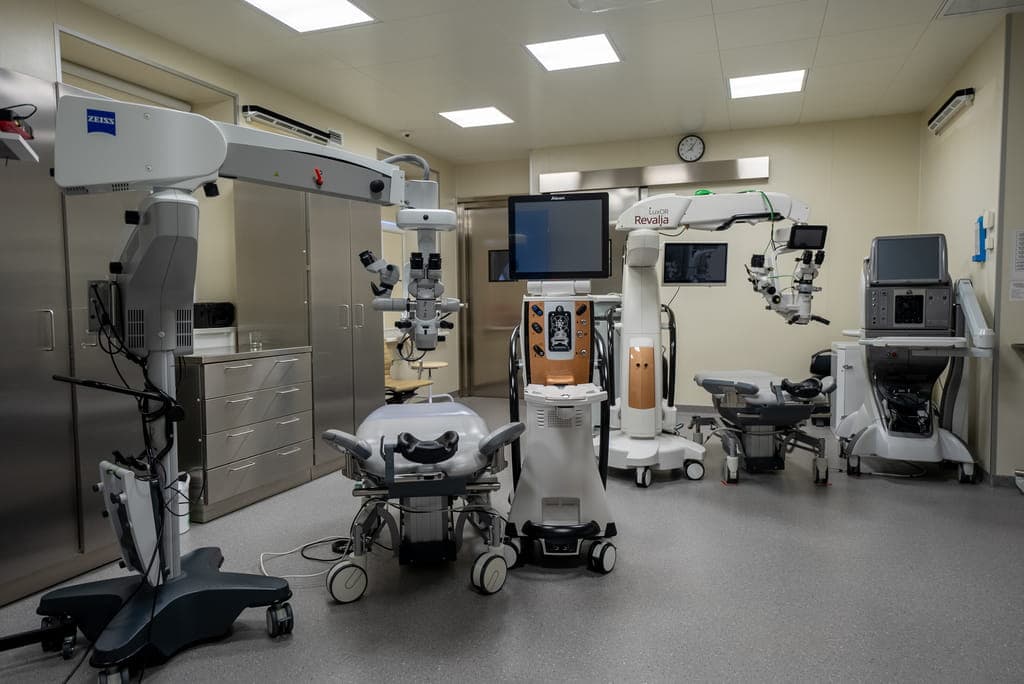
BiVision RLE is a high-precision microsurgical procedure in which the eye’s natural crystalline lens is replaced with an intraocular lens (IOL) to restore clear vision at near, intermediate, and distance ranges. The method is selected when laser correction is not recommended or when its predictability is limited (thin/irregular cornea, high dioptres, combined refractive errors).
Who it is suitable for: people aged 45+ with presbyopia; patients with pronounced myopia/hyperopia, astigmatism, early lens changes, or an increased risk of cataract.
Why choose BiVision RLE: key advantages
Refractive surgery in ophthalmology is suitable for both farsightedness and nearsightedness, including astigmatism.
Key indications and symptoms when refractive lens exchange (RLE) may be considered
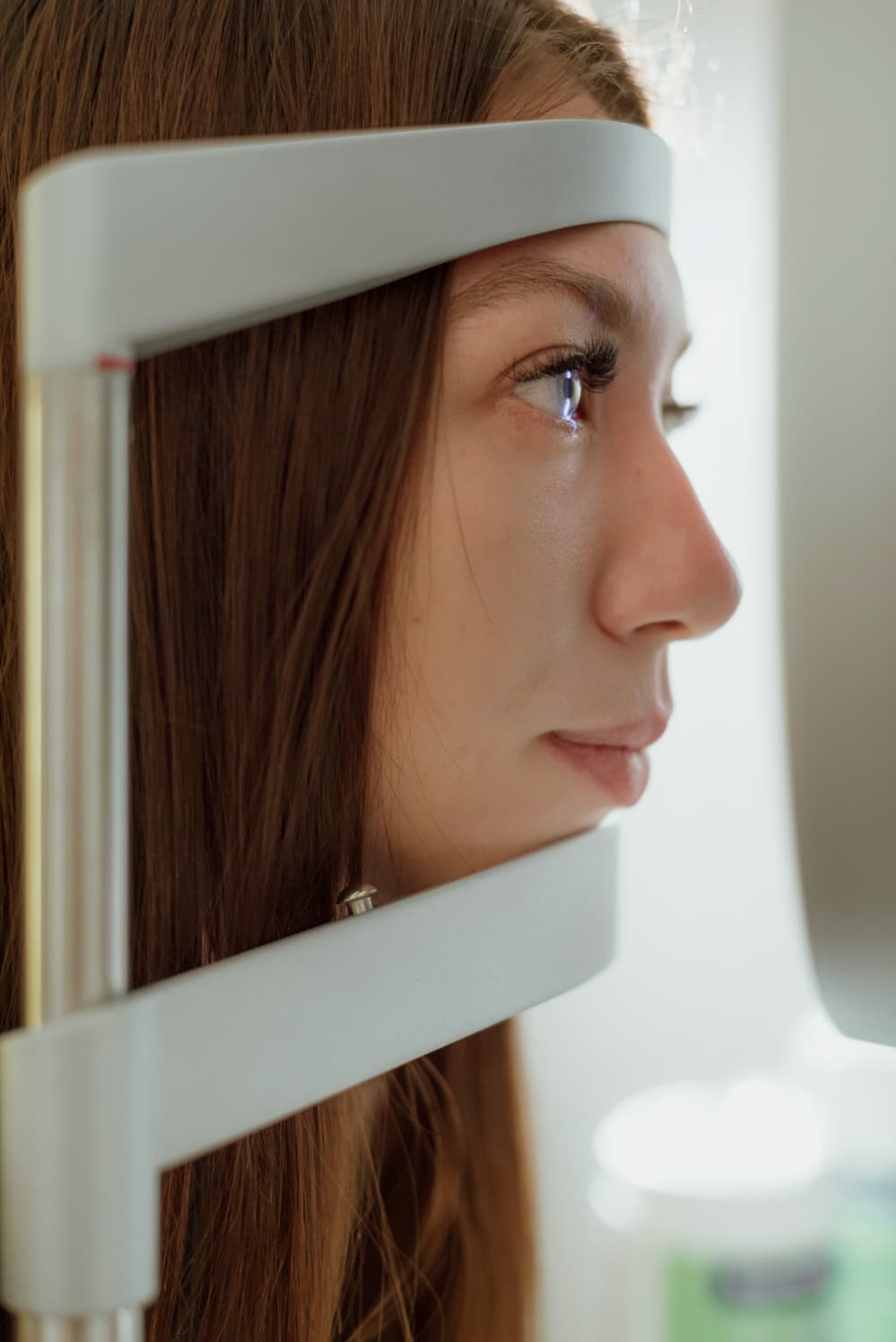
Key indications and symptoms when refractive lens exchange (RLE) may be considered
RLE is considered when age-related farsightedness is combined with other refractive errors—for example, when different glasses are needed for reading and computer work, and by evening the eyes tire more quickly and focus becomes less stable. Patients often report “hazy” vision in the morning, reduced contrast, glare during night driving, and a feeling that glasses no longer provide the same sharpness. If laser correction was previously not recommended due to corneal parameters, RLE becomes a practical alternative: the method works with the lens and does not alter the cornea. With early lens changes, the intervention may also reduce the likelihood of cataract in the future, and for people with high visual demands it can help achieve a more stable image and contrast.
Why patients choose RLE
Contact us
If you have any questions, call our friendly call center or make an appointment for diagnostics with further consultation.
We work:
Mon–Sat, 9:00 AM – 6:00 PM
Why patients choose RLE
The decision in favour of RLE is most often driven by a combination of medical indications and lifestyle needs:
1. Medical indications
- Corneal laser correction cannot be performed or does not provide the expected predictability.
- A wider correction range is required (high dioptres; combination of myopia/hyperopia with astigmatism).
- There is a risk of cataract or early manifestations—lens replacement addresses the issue proactively.
2. Expectations regarding vision quality
- The goal of seeing without glasses at near, intermediate, and distance ranges (multifocal/trifocal IOLs).
- The need for stable sharpness throughout the day: reading, screens, driving, sports.
3. Safety and predictability
- RLE does not affect the cornea—important with a thin or “problematic” cornea.
- Cataract prevention: after replacing the natural lens, cataract can no longer develop in that lens.
- Personalised IOL selection based on tasks and habits (reading, computer work, night driving).
Who is recommended refractive lensectomy:
BiVision RLE is most often recommended after the age of 45, when typical signs of presbyopia appear—blurred vision while reading, the need to hold text farther away, and rapid visual fatigue. Implantation of a multifocal lens restores comfort and helps reduce the need to constantly switch between different glasses.
At our centre in Vilnius, refractive lens exchange procedures are performed by surgeons with experience of at least 50,000 successful operations.
We use only premium intraocular lenses.

„Rayner GALAXY“
the world's #1 lens for cataract treatment
the world's #1 intraocular lens for cataract treatment
Stages
01Booking and getting ready for diagnostics
You can book by phone or online—it takes only a few minutes.
Special preparation is usually not required. If you wear soft contact lenses, remove them the evening before (preferably 12 hours prior to the visit). Bring your current glasses/prescription and results of previous examinations so we can assess dynamics.
We recommend planning your visit without self-driving immediately afterwards: during the examination the pupils may be dilated, and near vision may temporarily worsen.
02Computerised vision diagnostics
Duration: approximately 2–2.5 hours.
We perform a complete set of measurements required for refractive lens exchange (RLE): autorefractometry and visual acuity assessment, biometry and IOL power calculation, corneal keratotopography/tomography, tonometry, and—if needed—OCT of the macula and optic nerve, as well as tear film evaluation.
To ensure accuracy, pupil-dilating drops may be used—near vision can remain blurred for several hours after the examination.
03Ophthalmologist consultation
After the examination, the doctor will explain the findings, discuss the prognosis, and select the IOL type according to your lifestyle (mono/EDOF/trifocal; toric for astigmatism).
We will review indications and potential limitations, answer questions, provide a transparent estimate, and outline the preparation plan. If necessary, you will receive a list of standard preoperative tests and recommendations.
Together, we will determine the RLE date and an individual recovery plan.

Take care of your vision health today!
Book an eye examination to learn more about the condition of your visual system!
We work:
Mon–Sat, 9:00 AM – 6:00 PM
Innovative vision restoration: refractive lens exchange (RLE)
Refractive lens exchange (RLE, refractive lensectomy) is a vision correction method in which the natural lens is replaced with an intraocular lens (IOL). RLE can correct myopia, hyperopia, presbyopia, and astigmatism and is a rational alternative when laser correction is contraindicated (thin cornea, scarring, unstable refraction) and when stable clarity without glasses and contact lenses is important.
Why choose BiVision RLE with us
At our clinic in Vilnius, refractive lens exchange combines advanced technology with an experienced team. Following detailed diagnostics, we select an IOL based on real visual tasks: reading, computer work, activity, and night driving. During lens removal, we use a controlled fluid stream instead of ultrasound (BiVision iQ 5 Minutes), which reduces corneal impact and speeds up recovery. We work with original Rayner lenses—from multifocal to toric—and focus on long-term visual comfort. Our surgeons have more than ten years of practice, including training in European centres.
Preparation and recovery
Preparation is straightforward: bring previous medical conclusions, a list of current medications, and follow contact lens recommendations if you use them. On the day of surgery, it is advisable to come with an accompanying person for a comfortable return home. After the procedure, you will use eye drops according to the prescribed regimen, avoid swimming pools and saunas for 2–3 weeks, and temporarily limit intensive physical activity. Resuming driving should be confirmed with the surgeon during a follow-up visit.
Intraocular lenses (IOLs) we use
We work with Rayner and Alcon product lines, selecting the configuration according to your ocular parameters and lifestyle. For maximum independence from glasses, we offer trifocal solutions; if astigmatism correction is required, we use toric models; if the priority is natural visual comfort and extended depth of focus, EDOF IOLs may be suitable. The final choice is based on biometry, the degree of corneal astigmatism, and your everyday tasks.
Pricing and what is included
The cost of RLE in Vilnius primarily depends on the type of intraocular lens and individual clinical features. During the consultation, you will receive a personalised estimate with an explanation of each stage: diagnostics, surgery, and postoperative care. If needed, our administrator will advise on current loyalty programmes and payment options.
doctors
3
specialized doctors
Experts in refractive lensectomy
Our doctors will carefully study the condition of your visual system and determine whether correction is possible in your case.

Experience since 1990
Andrey Radko
Chief physician. Ophthalmologist of the highest category.

Experience since 2017
Povilas Stirbys
Ophthalmologist of the highest category. Doctor expert.

Experience since 2006
Kseniya Kayalova
Ophthalmologist of the highest category. Doctor expert.
reviews
1M
happy clients
reviews
What our patients say about us
1M
happy clients
Our eye centre has performed over 1,000,000 successful laser vision correction procedures and provided more than 5,000,000 ophthalmology consultations.
reviews

Laser vision correction
Olesya Andreseen
I have had poor eyesight since childhood. Contact lenses caused significant eye discomfort, and glasses sometimes gave me headaches. After laser correction, I feel much better. While watching TV, I can now see small text that wasn’t visible even with glasses. I am very impressed with the clinic’s work — everything was at the highest level. Thank you for the opportunity to see with my own eyes.

Laser vision correction
Kobrin Sergej Aleksejevich
After visiting the medical center New Vision, I was very satisfied with the doctors’ work. The doctors and staff are friendly, polite, and clearly know their job.
Laser vision correction
Kleščiukas Liudmila Aleksejevna
I would like to express my great gratitude to the entire team, especially Murashko V.A., for the excellent work and high level of professionalism. For a long time, I could not decide to undergo surgery, but eventually I did. Everything went painlessly, very clearly, and quickly. I began to see the world in bright colors. I wish all employees of the New Vision medical center good health and many more years of helping people regain their confidence and health. Thank you very much!
Laser vision correction
Litvinčiukas Ivan Jurjevičius
Everything was done quickly, efficiently, and professionally. I am very satisfied with the result. I appreciated the attentive attitude of the staff and the comprehensive postoperative care. I will definitely recommend the New Vision medical center to all my acquaintances.
Frequently asked questions about refractive lens exchange (lensectomy)
appointment booking
Convenient booking and transparent consultation cost
We have made the process of contacting the clinic as simple as possible. You only need to book an appointment with an ophthalmologist in Vilnius online or by phone.
book a consultation
required fields