For EU and UK residents
Cataract treatmentFree

Surgery service fee after the contribution: 0 €
Pay only for your chosen lens.
A clear path to cataract surgery.
A €500 contribution through this special programme covers the surgery service fee. You pay only for the premium intraocular lens you choose. Your doctor will help select the best option for your eyes.
500 € surgery contribution
The clinic's special programme covers this amount. To receive it, simply book a consultation.
Pay only for your chosen lens
The premium lens price depends on the individual choice and is discussed during your consultation.
Limited-time offer.
Included with your free surgery
- Cataract surgery using modern equipment
- Preoperative assessment by an anaesthetist and anaesthesia
- The work of the surgeon, assistant and surgical nurses
- The work of the sterilisation unit, nurses, medical engineer and technical staff
- Postoperative monitoring and a follow-up examination
All of these services cost €0 under the programme. You pay separately only for the premium lens selected for you.
Open across the EU and UK
 EU
EU









 UK
UKYou do not need to live in Lithuania. Residents of any EU country or the United Kingdom can use this programme.
No programme paperwork: no doctor's referral, separate application or quota. Just book a consultation.
We also assess complex cases, including problems following surgery at another clinic. A doctor will review treatment options individually.
Choose your treatment weekThe path to surgery
A simpler start
When your vision changes, time for yourself and the people close to you feels more precious. Cataract surgery funded by Lithuania's health insurance fund starts with a doctor's referral; consultation and surgery dates depend on the chosen provider's availability.
With our programme, simply book a consultation – no referral, separate application or quota. The clinic covers the surgery service fee; you pay only for the premium lens selected for your eyes. Less time on formalities, more for yourself and those close to you.
Lenses for everyday life
Premium lenses can support different vision goals. Think about what matters most in your day.
Distance vision
For driving, walking and other activities where seeing clearly in the distance matters most.
Distance and screens
For seeing at a distance and at your computer or during other everyday tasks.
A range of distances
For distance, intermediate and reading vision, with the goal of relying less on glasses.
You do not need to decide on your own. During the consultation, your doctor will assess your eyes, astigmatism and daily habits, then help you choose a suitable lens. Results depend on your individual eye health.
Our premium lens partners
We select the most suitable lens for your eyes from the Rayner, Alcon and ZEISS ranges.



A new lens ordered for you
After your consultation, we order your new premium lens individually, directly from the manufacturer for your operation. Available models can be delivered within one working day. Rare or custom toric lenses may take longer; your doctor will confirm the delivery time during your examination.
Patients receive documentation for their new chosen lens, including the manufacturer's lens passport and warranty.
Cataract treatment in Vilnius
Choose a week that suits you
Plan treatment for both eyes in one visit. Monday: examination and lens selection. Wednesday and Thursday: surgery. Fewer journeys, more time for yourself.
Your visit plan
November 2026
Monday
Examination
Lens selection
Wednesday
Surgery on your first eye
Thursday
Surgery on your second eye
By arrangement
Follow-up check
Priority scheduling
Review your chosen plan and leave your contact details. The clinic will help arrange your visit and treatment dates.
Arrive with your test results
Bring the required preoperative test results with you. Check the list of tests and how recent the results need to be with the clinic before travelling.
You can also have the tests at a private clinic in Vilnius and receive the results within one day. These tests are paid for separately at the clinic providing them.
Fewer journeys, more time for yourself
We arrange postoperative checks as a priority so you can plan your journey home with confidence.
Your doctor will confirm the schedule for both eyes and your departure date based on your eye health.
about the service
Cataract surgery at our centre in Vilnius under the “AquaStream iQ-5 minutes” protocol
500 k+
successful cataract removals
Cataract surgery at our centre in Vilnius under the “AquaStream iQ-5 minutes” protocol
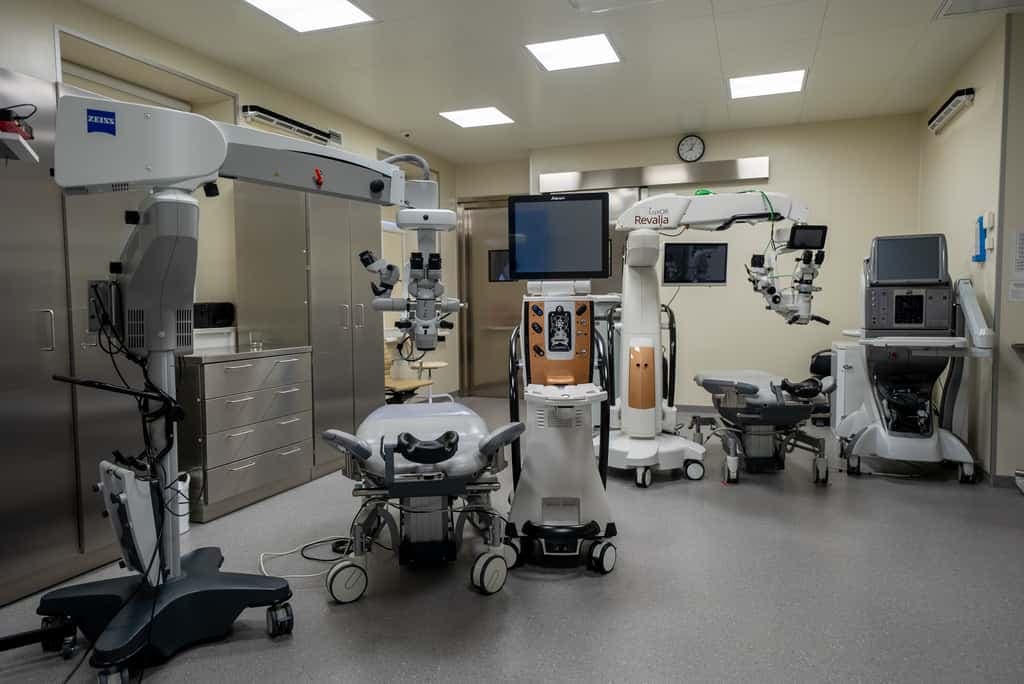
Cataract treatment at our centre is performed under the “AquaStream iQ-5 minutes” protocol. This is a modern cataract phacoemulsification approach widely regarded as the “gold standard” in contemporary ophthalmology. Cataract surgery is carried out through a micro-incision, without sutures, using topical (drop) anaesthesia, in line with European clinical protocols, with precise navigation and continuous monitoring of key parameters. This approach allows the procedure to be performed efficiently and predictably, with a high level of comfort for the patient, and many people are able to return to their usual routine within a few days.
We use up-to-date cataract surgery technologies and select an intraocular lens (IOL) individually for each patient, taking into account the condition of the cornea and retina, the cataract type (age-related, traumatic, complicated) and the patient’s visual needs. Cataract treatment at our clinic in Lithuania is not merely the removal of a clouded natural lens; it is a strategy aimed at restoring the highest achievable quality of vision at near, intermediate and distance ranges through IOL implantation.
methods
Innovative cataract treatment technologies — at our clinic
We apply a contemporary phacoemulsification technique, “AquaStream”, which is widely recognised in practical ophthalmology.
What is cataract?
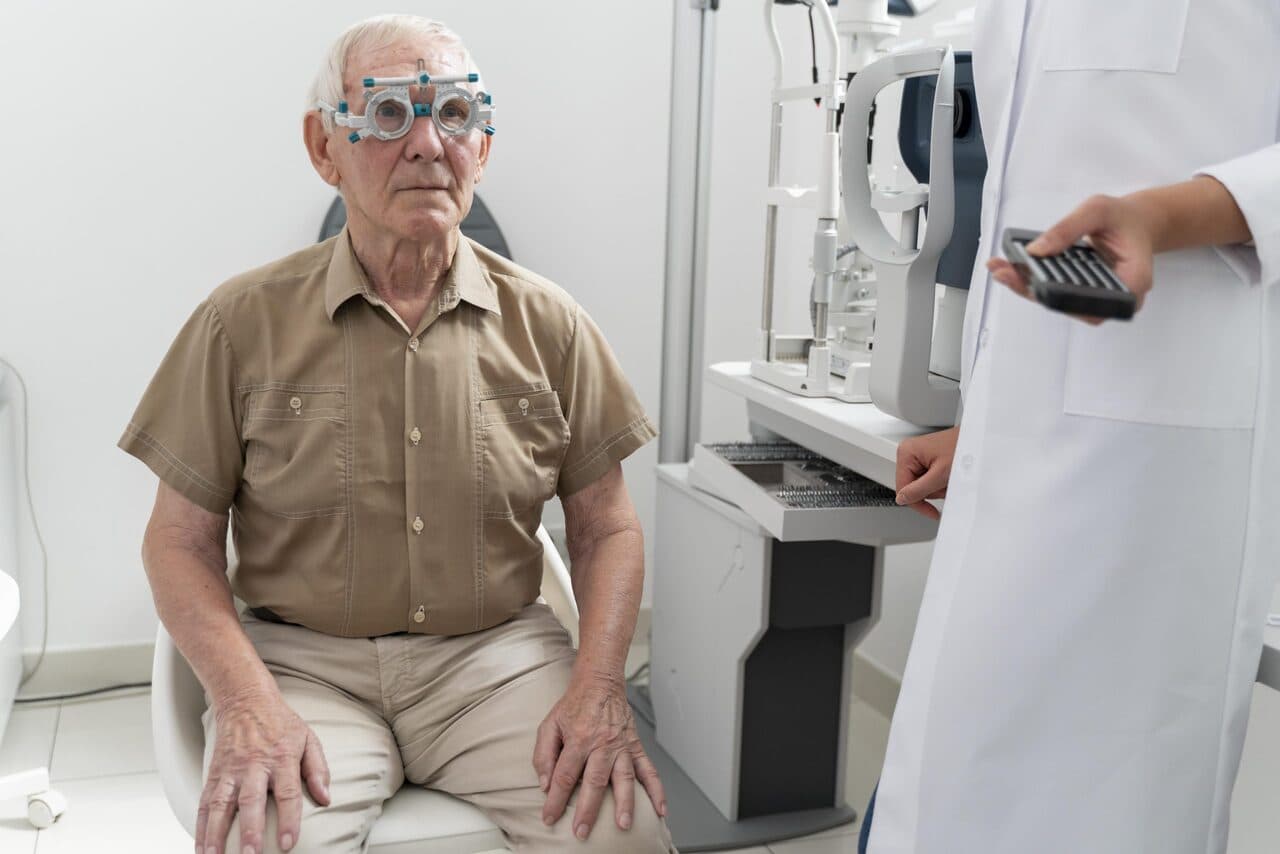
What is cataract?
A cataract is a condition in which the eye’s natural crystalline lens loses its transparency, becomes cloudy and often denser. Under normal conditions, the lens transmits and focuses light onto the retina to produce a clear image.
When a cataract develops, this mechanism is disrupted: vision becomes blurred, a “mist” or “haze” may appear in front of the eyes, visual quality can deteriorate in bright light and at dusk, and colour perception may change.
The effective treatment for cataract is surgical: removal of the clouded lens with implantation of an artificial intraocular lens — i.e., intraocular lens replacement (lens replacement surgery).
We treat cataract in complex cases:
traumatic cataract
correction of outcomes after unsuccessful procedures in other clinics
management of the most challenging cases
At our centre, cataract removal procedures are performed by surgeons with experience of at least 50,000 successful interventions.
We use only premium intraocular lenses.

Rayner GALAXY
the world's #1 lens for cataract treatment
the world's #1 intraocular lens for cataract treatment
advantages
Benefits of cataract treatment in Vilnius at our ophthalmology centre
You can be confident in the quality of care, as you entrust your vision to a modern clinic.
doctors
3
specialized doctors
Experts in cataract treatment
Our doctors will carefully study the condition of your visual system and determine whether correction is possible in your case.

Experience since 1990
Andrey Radko
Chief physician. Ophthalmologist of the highest category.

Experience since 2017
Povilas Stirbys
Ophthalmologist of the highest category. Doctor expert.

Experience since 2006
Kseniya Kayalova
Ophthalmologist of the highest category. Doctor expert.
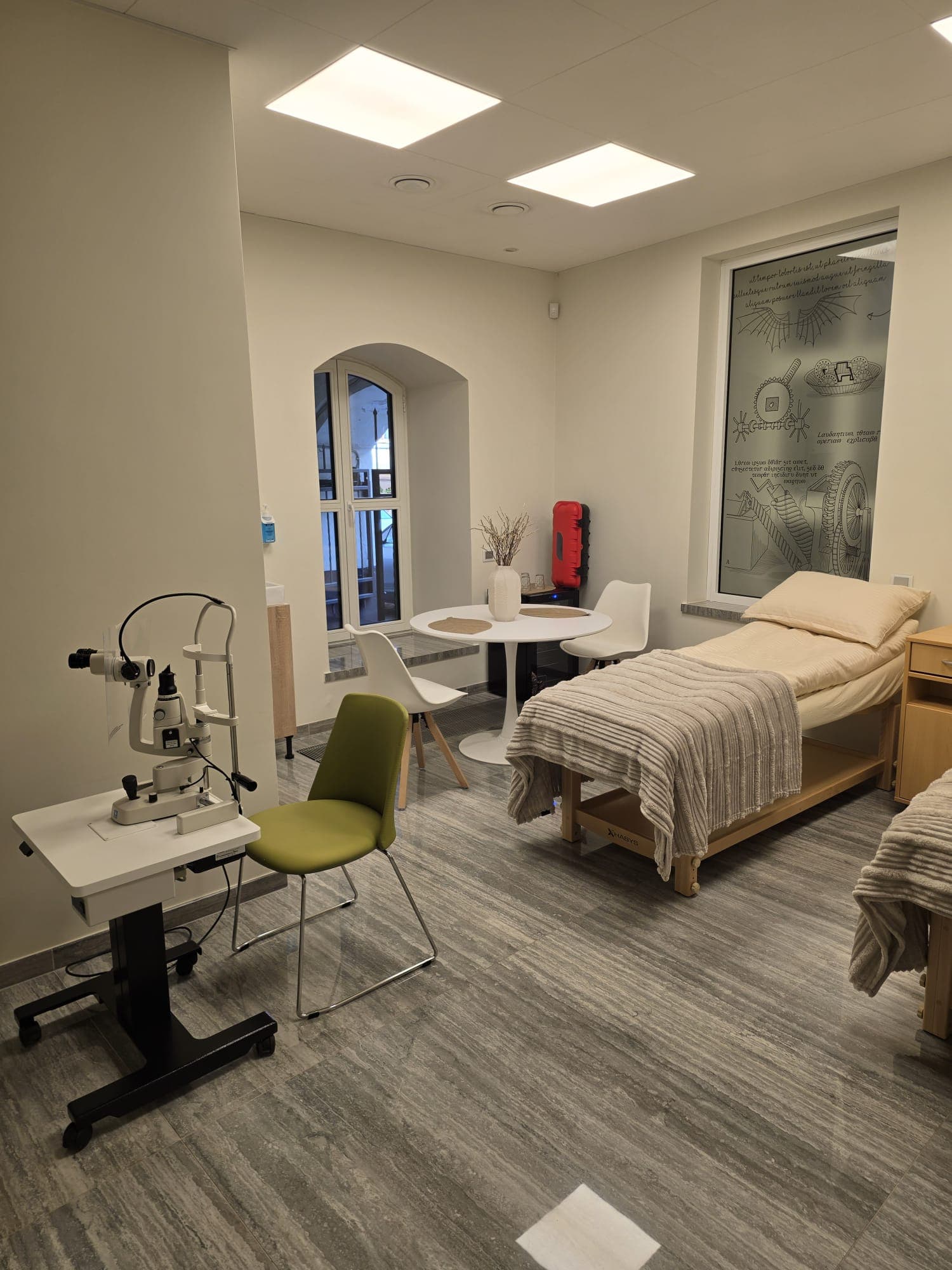
Platinum Programme
Enhanced comfort after eye surgery
Rest in a comfortable room after your procedure. Your doctor sees you there, with a direct point of contact at the clinic afterwards.
Just 2 places each day
Explore the Platinum Programmereviews
1M
happy clients
reviews
What our patients say about us
1M
happy clients
Our eye centre has performed over 1,000,000 successful laser vision correction procedures and provided more than 5,000,000 ophthalmology consultations.
reviews

Cataract treatment
Lukas Žukauskas
It was obvious that cataract was affecting daily life: light was irritating, the image looked blurry, and my eyes got tired faster. At the clinic in Vilnius they did a very thorough examination and explained how the cataract surgery would go. The IOL implantation was calm. In the first days after surgery I already felt my vision becoming more “clear.” The recovery plan and restrictions were provided clearly and were easy to follow.
Cataract treatment
Simona Vitkutė
The main issue was heavy cloudiness and worse vision at dusk. The clinic confirmed cataract and recommended cataract removal by phacoemulsification with IOL implantation. After the lens replacement, glare decreased, contrast improved, and everything felt more “clear.” The clear recovery plan and support during follow-up visits were very helpful.
Cataract treatment
Mantas Jankauskas
At an eye clinic in Vilnius, I was impressed by the level of diagnostics: measurements, imaging, and clear explanations in simple terms. Before surgery it was difficult to read and work at a computer, and I kept increasing the screen brightness. After the lens replacement it became comfortable again: text is easier to perceive and details are clearer. Recovery after cataract surgery was calm thanks to clear instructions and regular follow-ups. Communication was respectful, with no rush or pressure.
Cataract treatment
Austėja Mikalauskaitė
Strong glare and halos around light sources were the main reason I came in. At the consultation they confirmed cataract and recommended modern treatment—phacoemulsification with IOL implantation. I liked that they explained in detail how to choose the lens and what results to expect. After the cataract removal it became much easier to drive and look at bright screens. Follow-up visits were on schedule and came with clear explanations.
Frequently asked questions about cataract
A cataract is a clouding of the eye’s natural crystalline lens, leading to a gradual reduction in visual acuity. Most commonly, cataract is associated with age-related changes, metabolic disturbances, chronic conditions (such as diabetes and hypertension), eye injuries, or complications following other interventions. Traumatic cataract may develop when the lens is damaged after a blunt impact or a penetrating injury. Without treatment, vision can continue to worsen up to a significant loss of functional vision.
Early signs include blurred or “foggy” vision, as if looking through frosted glass or a haze. You may notice difficulty reading, a need to change spectacles more often, reduced vision in low light or in bright light, halos and glare from car headlights and street lights. Some patients report reduced contrast sensitivity and colour distortion. If such symptoms occur, it is important to undergo a diagnostic assessment and discuss cataract treatment with an ophthalmologist.
Unfortunately, cataract cannot be cured without surgery. Drops, vitamins or other medications cannot restore transparency to a lens that has already become cloudy. They may only temporarily slow progression, but they do not address the underlying cause of vision deterioration. The effective treatment is surgical removal of the lens with implantation of an intraocular lens (IOL). Only surgery can restore vision and improve day-to-day comfort.
The indication is determined by an ophthalmologist after a comprehensive examination. Surgery is typically recommended when cataract begins to interfere noticeably with work, driving, reading or daily activities, or when there is an increased risk of complications. There is no need to wait until the cataract fully “matures”: modern technology allows surgery at earlier stages, when the lens is less dense and recovery is often faster and more comfortable.
Cataract surgery is usually performed on an outpatient basis through a micro-incision, without sutures, and commonly takes only a few minutes. Under the “AquaStream iQ-5 minutes” protocol, a balanced solution is used to assist gentle fragmentation of the clouded lens. The fragments are then removed, and a clear intraocular lens is implanted. Anaesthesia is topical (drops), so the procedure is generally painless, and the patient returns home the same day.
Many patients notice an improvement in vision on the same day or the following day. Full visual stabilisation may take from several days to several weeks, depending on individual factors. During the postoperative period, it is important to follow the doctor’s instructions: avoid rubbing the eye, avoid heavy lifting, protect the eye from dust and contamination, and use prescribed drops correctly. Compliance helps reduce risks and achieve the best possible outcome.
The outcome depends on the type of implanted intraocular lens. A monofocal lens provides good vision at one distance (typically distance vision), so reading glasses may be needed. If desired, a multifocal or trifocal lens can be selected to provide vision at different distances and reduce dependence on glasses. Lens selection is individual and is discussed during diagnostics and a consultation with the surgeon.
Yes, our center treats cataracts in children, including traumatic cataracts, and performs correction of unsuccessful previous cataract surgeries performed elsewhere. We handle complex cases involving scar tissue, accompanying retinal pathologies, glaucoma, or situations where earlier treatment did not produce the expected results. Each clinical case is evaluated individually, with detailed diagnostics and surgical planning. Our goal is to restore vision and improve the patient’s quality of life, regardless of the complexity of the condition.
appointment booking
Book a consultation to access the programme
We have made the process of contacting the clinic as simple as possible. You only need to book an appointment with an ophthalmologist in Vilnius online or by phone.
book a consultation
required fields